The still-unsolved shooting death of an acclaimed Massachusetts Institute of Technology professor this week has sent shockwaves through the campus and the broader fusion energy research community in which he was prominent.
Nuno Loureiro taught plasma physics at the elite university and led its Plasma Science and Fusion Center. The 47-year-old was shot at his home in Brookline, Massachusetts, Monday and died at a nearby hospital the next day. His death is being investigated as a homicide.
Police have not identified a suspect in the homicide, which occurred two days after a shooting at another elite college, Brown University, in neighboring Rhode Island, left two dead and nine injured. Law enforcement is investigating possible connections between the Brown University shooting and Loureiro's homicide, sources tell CBS News.
"Nuno was not only a brilliant scientist, he was a brilliant person," colleague Dennis Whyte said in an obituary published Tuesday by MIT. "He shone a bright light as a mentor, friend, teacher, colleague and leader and was universally admired for his articulate, compassionate manner. His loss is immeasurable to our community at the PSFC, NSE and MIT, and around the entire fusion and plasma research world."
The obituary described Loureiro as "a lauded theoretical physicist and fusion scientist," whose "research addressed complex problems lurking at the center of fusion vacuum chambers and at the edges of the universe."
Sources tell CBS News that Loureiro wasn't working on anything classified, as there's no classified work being performed on campus.

MIT President Sally Kornbluth wrote in a letter to students and faculty that "in the face of this shocking loss, our hearts go out to his wife and their family and to his many devoted students, friends and colleagues."
A native of Portugal, whose résumé included stints at the Imperial College London and Princeton, Loureir "used a combination of analytical theory and state-of-the art simulations to investigate several topics in nonlinear plasma dynamics, particularly magnetic reconnection, turbulence and instabilities," according to his university biography.
His research led to widespread acclaim and prestigious awards that included the American Physical Society Thomas H. Stix Award for Outstanding Early Career Contributions to Plasma Physics Research and the Presidential Early Career Award for Scientists and Engineers.
Person of interest identified in deadly Brown University shooting
LATEST POSTS
- 1
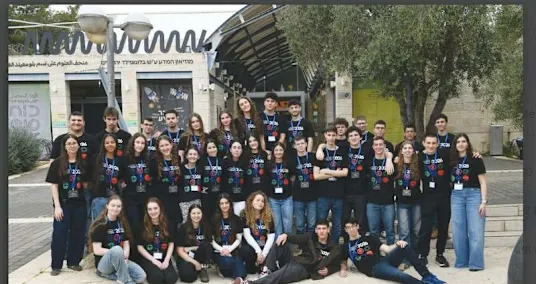
 Amid Iran war, 53 of Israel's future scientists showcase projects in Jerusalem contest
 - 2FDA approves Wegovy pill for weight loss: What to know
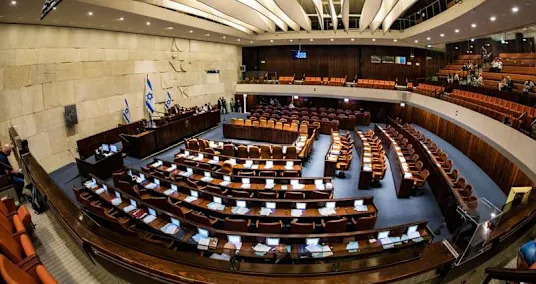
- 3Israeli lawmakers pass bill reviving death penalty for terrorists
- 4Move. Cheer. Dance. Do the wave. How to tap into the collective joy of 'we mode'
- 5At least 11 killed in South Africa mass shooting



- AI’s errors may be impossible to eliminate – what that means for its use in health care
- Germany's Bundestag extends two armed forces missions abroad
- Taste the World: Five Food sources That Have Dazzled Worldwide Palates
- The Solution to Flexibility: Developing Internal Fortitude Notwithstanding Misfortune
- Consumer experts: German petrol hikes rule won't bring down prices
- Best Getaway destination: Ocean side, Mountain, or City
- The Most Astonishing Arising Advances to Watch
- The 3 little words TV fans can't stop obsessing over
- All the ways Marjorie Taylor Greene has shifted her approach lately — and why Trump is 'surprised at her'